
The Impact of Interest Rates on Investment Decisions in Canada
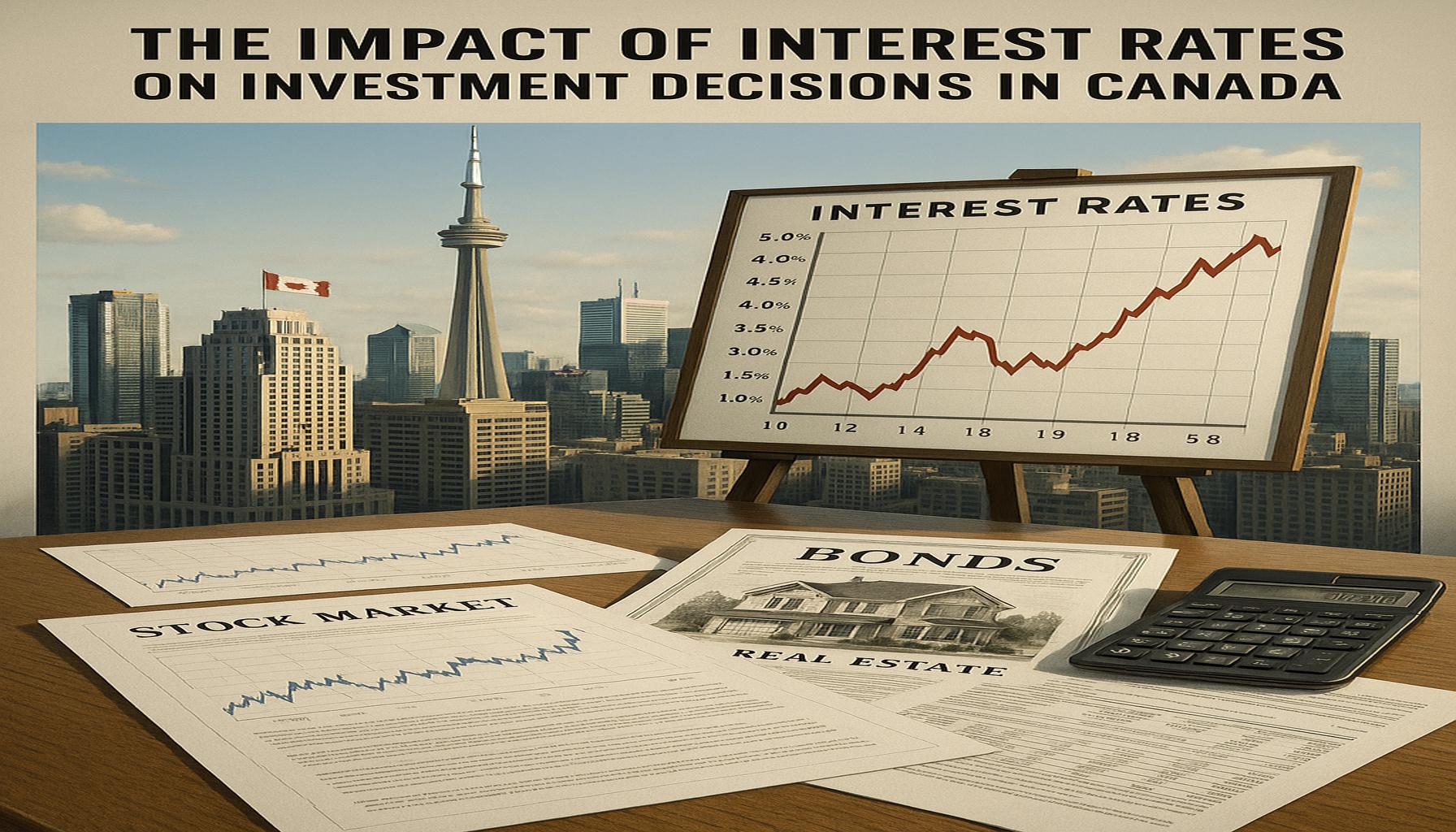
Understanding Interest Rates and their Impact on Canadian Investments
In today’s fast-paced financial environment, interest rates are more than just numbers—they are powerful indicators that shape the investment landscape across Canada. The interplay between interest rates and investment behavior is a multifaceted phenomenon that deserves a closer examination, especially as technological advancements reshape the way investors engage with their portfolios.
Cost of Borrowing stands as a primary concern for both individuals and businesses. When interest rates are low, borrowing becomes more affordable, encouraging businesses to invest in expansion and innovation. For instance, a Canadian startup considering launching a new product may find it easier to secure a loan during a period of low-interest rates. Conversely, when rates increase, the cost of servicing existing debts also rises, leading to potential cutbacks in spending or investment. This dynamic can directly affect job creation and overall economic growth, making it a crucial factor for investors to consider.
Another significant consideration is Market Sentiment. Interest rate fluctuations often indicate economic strength or weakness, which can lead to shifts in investor confidence. For example, if investors perceive that rising rates might lead to an economic slowdown, they may become risk-averse, choosing to liquidate stock holdings in favor of safer assets like government bonds. This phenomenon was notably evident during the last economic downturn, where uncertainty led Canadian investors to favor gold and real estate over traditional equities. The emotional response to interest rate changes can create ripple effects throughout various sectors of the economy.
Furthermore, Asset Allocation becomes critical in changing interest rate environments. Investors must continuously reassess their portfolios in light of rate hikes or cuts. While rising rates generally favor fixed-income securities and may depress stock prices, lower rates typically lead to a boost in equities as companies benefit from cheaper borrowing costs. For instance, Canadian real estate investments may appear more attractive when interest rates are low, driving demand for residential properties as potential returns on investments improve. Thus, adapting asset allocation strategies becomes essential to mitigate risks and seize opportunities in a volatile market.
With the infusion of innovative financial technologies, Canadian investors now have access to cutting-edge tools that facilitate better decision-making. Technologies like AI-driven analytics can analyze vast amounts of data quickly, providing insights that were previously impossible to achieve at scale. Real-time data monitoring allows investors to react swiftly to market changes, ensuring they remain one step ahead in a competitive landscape. This proactive approach, combined with evolving interest rate trends, transforms the way investment strategies are crafted and executed.
In conclusion, understanding the intricate relationship between interest rates and investment decisions is vital for navigating the evolving financial landscape. As we anticipate further developments in financial technology, the future of investing in Canada promises to be dynamic and exciting, making it imperative for investors to stay informed and adaptable.
DISCOVER MORE: Click here to dive deeper
The Digital Transformation of Investment Strategies
As the financial landscape continues to evolve, the impact of interest rates on investment decisions in Canada is being redefined through digital transformation. The integration of advanced technologies into the investment sector is reshaping how individuals, businesses, and institutions approach their financial strategies, particularly in response to changing interest rates. A deeper exploration reveals several key trends that are influencing the Canadian investment market.
Real-Time Analytics have become essential for investors navigating the complexities of interest rate movements. Advanced algorithms and data analytics tools are providing unprecedented insights into market trends and potential future scenarios. Investors can now evaluate how changing rates may influence not just their current portfolios, but also future investment opportunities across sectors. For example, with the rise of machine learning in finance, algorithms can assess large datasets to forecast how interest rate shifts could impact sector performance in real-time. This allows investors to make quicker, more informed decisions.
Robo-Advisors are also transforming the investment landscape in Canada. These AI-driven platforms offer personalized investment strategies based on individual risk tolerance and financial goals, factoring in interest rate trends. As more Canadians turn to automated investment management, the accessibility and affordability of high-quality investment advice increase. This democratization of investment guidance ensures that even novice investors can grasp the implications of fluctuating rates on their portfolios.
- Investment Education: Digital platforms are providing resources and tools that allow investors to educate themselves about interest rates and their implications.
- Diverse Investment Options: With the availability of innovative investment products, such as ETFs and REITs, investors can build more nuanced portfolios that respond effectively to rate changes.
- Enhanced Risk Management: Technology allows for better risk assessment through simulations that model various interest rate scenarios, helping investors mitigate potential losses.
In addition to individual innovations, the overall Global Connectivity of financial markets cannot be understated. As Canadian investors engage with international markets, they must consider how global interest rate policies impact their local investment decisions. For instance, Canada’s interest rates may mirror those of the U.S. Federal Reserve, influencing capital flows and investment sentiment across borders. The digital tools available today allow investors to access this information seamlessly, enabling timely reactions that align with rapidly changing global economic conditions.
Finally, as blockchain technology gains traction in the finance sector, it introduces new possibilities for investment transactions. Smart contracts can automate and streamline deals, ensuring that investment decisions are executed efficiently and transparently. This innovation complements traditional financial systems, allowing Canadian investors to optimize their responses to interest rate changes through secure and instantaneous transactions.
The future of investment in Canada undeniably hinges on the marriage of interest rate awareness and technological advancement. As investors lean into these new tools and strategies, the potential for adapting to fluctuations in rates expands, paving the way for a more resilient and dynamic investment landscape.
DISCOVER MORE: Click here for the top high-limit cards in Canada
Revolutionizing Investment Through Artificial Intelligence and Data Integration
As interest rates fluctuate, the critical role of artificial intelligence (AI) in shaping investment decisions comes to the forefront. In Canada, AI technologies are enabling investors to leverage predictive analytics for better forecasting. By utilizing massive datasets comprising historical price movements, economic indicators, and interest rate patterns, AI can generate actionable insights that allow investors to adjust their portfolios in response to rate changes swiftly. Investment firms are increasingly adopting AI-driven investment strategies that minimize risks while maximizing returns, thereby transforming the traditional investment landscape.
Data Integration plays a crucial role in this transformation, as investors now have the ability to assimilate diverse data points from various sources. With platforms aggregating economic reports, financial news, and social media sentiment, Canadian investors can perceive a holistic view of factors influencing interest rates. This level of comprehensive analysis empowers them to make more informed investment decisions, especially in sectors typically affected by rate changes, such as housing, utilities, and consumer goods. For example, real estate investment trusts (REITs) often respond sharply to interest rate announcements, and having a 360-degree view allows investors to navigate these shifts adeptly.
The landscape is also evolving due to increased regulatory transparency. In Canada, the regulatory framework has adapted to accommodate the digital age, focusing on enhancing transparency in how interest rates are set and communicated. Securities regulators have begun leveraging technology to provide real-time updates and insights about monetary policies. This proactive approach helps Canadian investors remain informed about potential rate hikes or cuts, ensuring that they can adapt their strategies timely to mitigate risks or seize opportunities as they arise.
- Peer-to-Peer Lending Platforms: These platforms are gaining traction in Canada, allowing individuals to bypass traditional banks and invest directly in loans. As interest rates rise, the demand for peer-to-peer lending can increase, offering an attractive alternative to conventional investment routes.
- Impact Investing: With a growing number of Canadian investors focused on responsible investments, interest rates indirectly influence choices in socially responsible funds. Fluctuations can shift attention towards green bonds or sustainable projects, particularly as the economy pivots towards sustainability.
- Cryptocurrency Adoption: As conventional financial systems face uncertainty due to changing interest rates, cryptocurrencies are becoming an attractive hedge for risk-averse investors. The growth of crypto-based financial products in Canada offers unique opportunities that respond to traditional market fluctuations.
In the face of evolving interest climate, collaborative investment platforms are also gaining momentum. Investors can share insights and strategies, capitalize on collective knowledge, and make data-driven decisions together. This communal approach to investment allows Canadians to enhance their financial literacy while adapting to rapid changes in interest rates. With digital technology facilitating real-time communication, investors can swiftly exchange ideas, strategies, and market analyses, strengthening the overall decision-making process.
As Canada embraces these transformative technologies, investors are poised to navigate the complexities of interest rate variations with enhanced agility. With AI at the core, integrated data systems, and a collaborative spirit driving investment strategies, the future of investing in Canada appears not just resilient but also profoundly innovative and dynamic.
DISCOVER MORE: Click here to find out how to boost your credit limit
Conclusion
The intersection of interest rates and investment decisions in Canada is becoming increasingly sophisticated as technology and data analytics forge new pathways for investors. As we navigate the ripple effects of rising and falling interest rates, the innovative use of artificial intelligence and data integration has emerged as a defining factor in making astute investment choices. The ability to harness vast data landscapes equips investors with a multifaceted understanding of market dynamics, enabling them to transition seamlessly between various asset classes while optimizing their risk-reward profiles.
Moreover, the transformations within the financial ecosystem extend to emerging trends, such as peer-to-peer lending and the rise of cryptocurrencies, which offer alternative avenues for capital allocation in a fluctuating interest landscape. The increasing focus on impact investing illustrates a broader societal shift toward responsible and sustainable investment choices, highlighting the profound connection between economic factors and ethical considerations.
As Canada stands at the forefront of digital evolution within the financial sector, the enhanced regulatory transparency brings not only greater confidence among investors but also promotes a culture of informed decision-making. The collaborations facilitated by technology further emphasize a communal approach, enhancing financial literacy and driving collective expertise among investors.
In conclusion, the future of investment in Canada, shaped by the interplay of interest rates and advanced technology, promises to be more innovative, responsive, and resilient. Embracing this transformative era, Canadian investors have the unique opportunity to leverage cutting-edge tools and methodologies that will empower them to thrive amidst the complexities of the shifting economic landscape.
Related posts:
Portfolio Diversification: Strategies for Beginner Investors in the Canadian Market
The Role of Financial Education in Preparing for Long-Term Investments in Canada
The best brokers to invest in the Canadian financial market
How to Avoid Debt and Maintain a Balanced Financial Life in Canada
How to Save Money on Rent and Housing in Canada
How to Build a Good Credit History Using Credit Cards in Canada

Beatriz Johnson is a seasoned financial analyst and writer with a passion for simplifying the complexities of economics and finance. With over a decade of experience in the industry, she specializes in topics like personal finance, investment strategies, and global economic trends. Through her work, Beatriz empowers readers to make informed financial decisions and stay ahead in the ever-changing economic landscape.